Guardians of the Cycle

Te mana o te moana, the power of the ocean

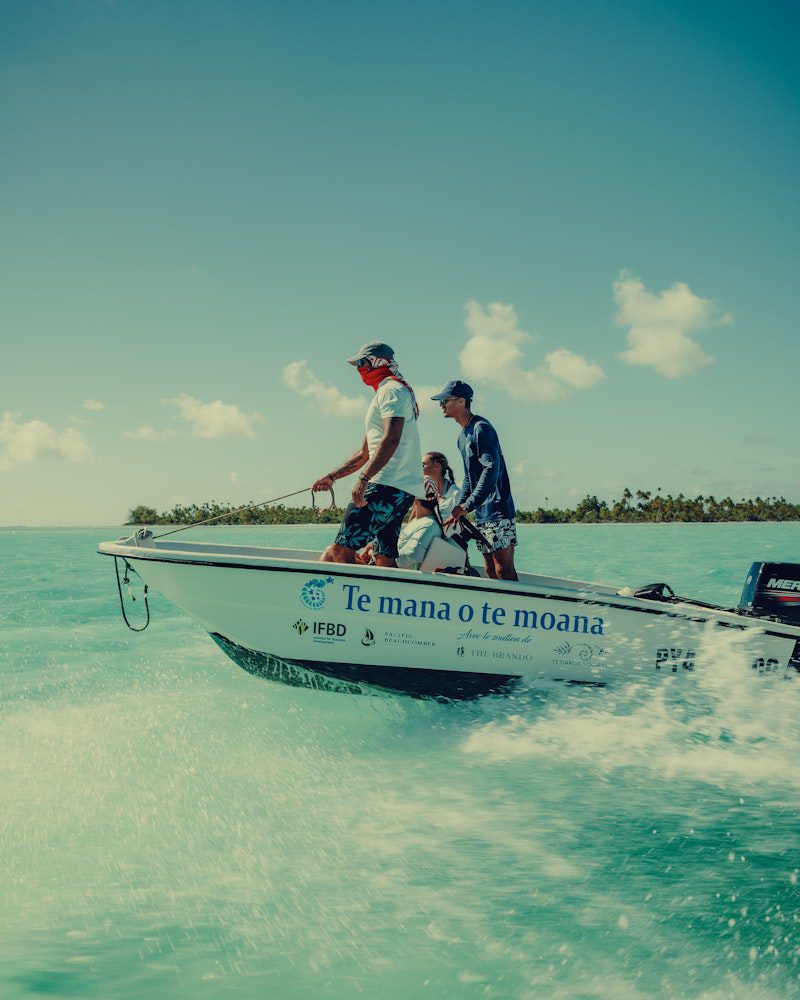
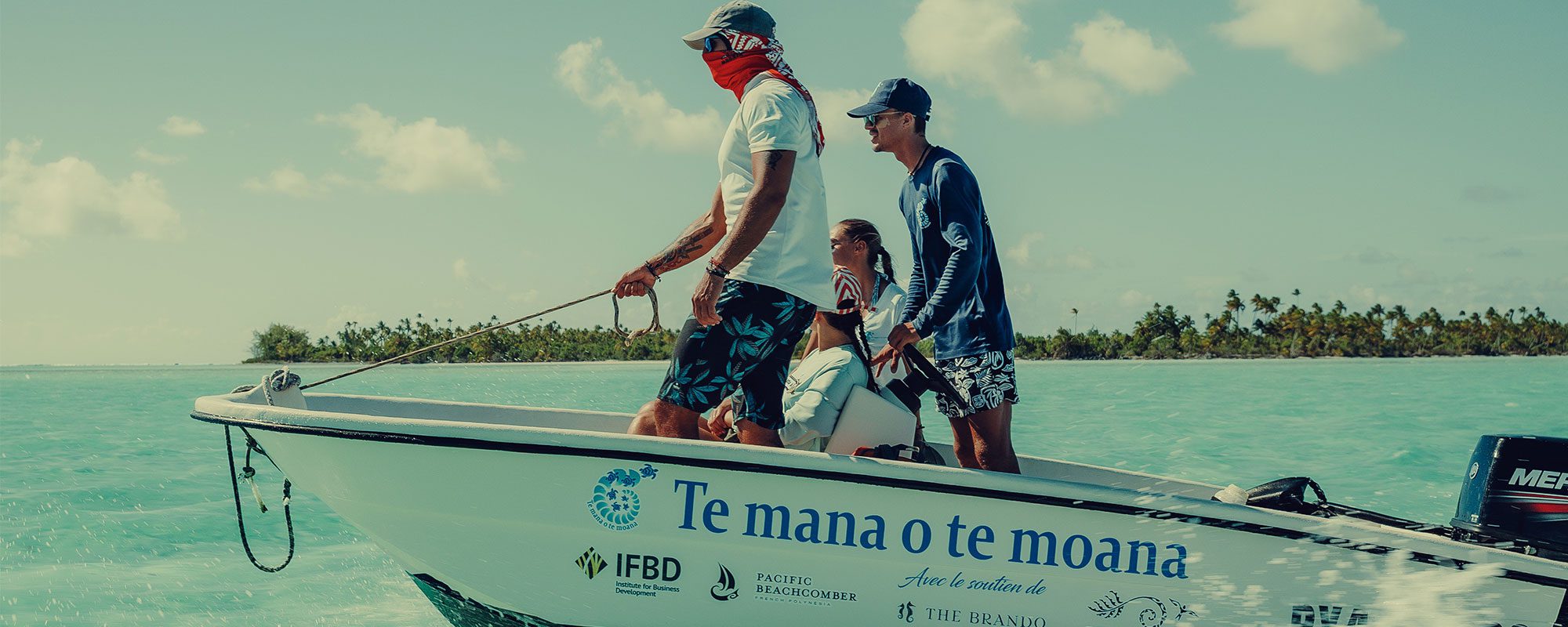
For more than 20 years, the Te Mana o Te Moana association has patrolled these beaches night after night during nesting season, monitoring each nest, identifying each female, and protecting this sacred cycle.

Founded by Dr. Cécile Gaspar in 2004, the organization has made Tetiaroa one of the most studied turtle nesting sites in the Pacific. Its teams conduct four patrols each night, recording more than 400 nesting events per season and monitoring the emergence of more than 350,000 hatchlings in 18 years of study.

Their work goes beyond data collection. They rescue trapped hatchlings, track genetic lineages, and study migration patterns using satellite tags.

An observation is a contribution

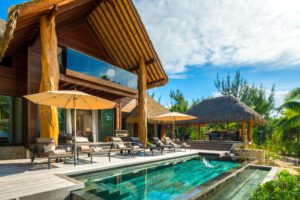
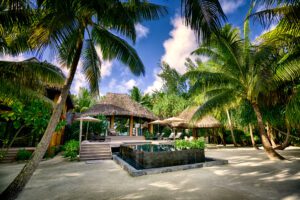
At The Brando, the beaches remain wild and unspoiled. During nesting season, green turtles lay their eggs just steps away from the villas, undisturbed by the presence of the resort.

Guests can join Te Mana o Te Moana marine biologists on night patrols, moving silently in the darkness in search of females laying eggs or emerging hatchlings. There are no guarantees (nature decides), but it is possible to witness an event that is truly life changing.

Those who experience it speak of transformation. Of standing in silence and holding their breath while a 300 pound turtle digs its nest. Of seeing dozens of baby turtles emerge from the sand and rush toward their destiny. Of feeling connected to something vast, ancient, and sacred.

Your presence directly supports conservation. Every stay at The Brando funds research, protection, and education efforts that ensure Tetiaroa will continue to welcome these ancient navigators home tomorrow.

GIVING TUESDAY

Protecting our seabirds together

DONATE

Seabirds thriving again in Tetiaora

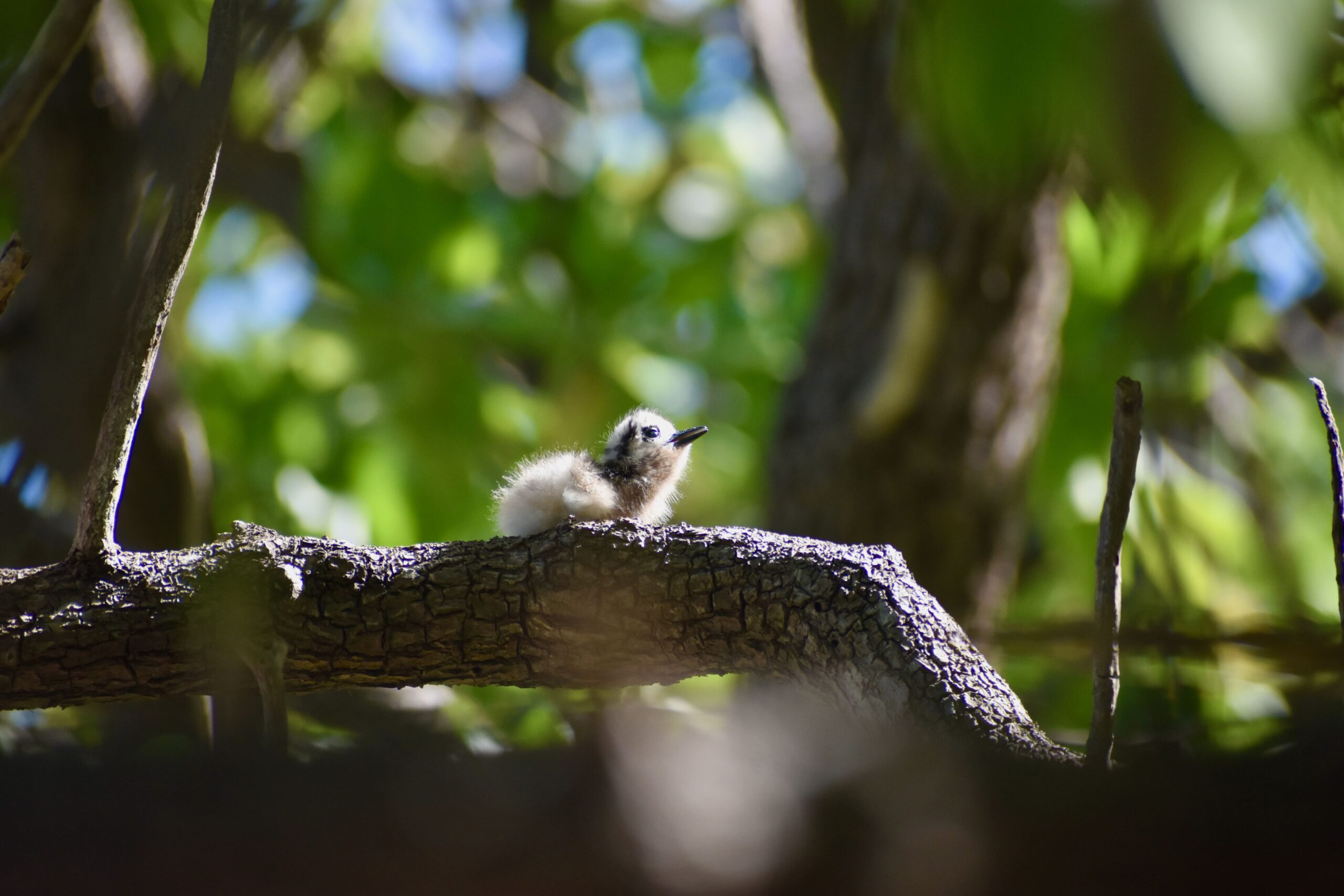
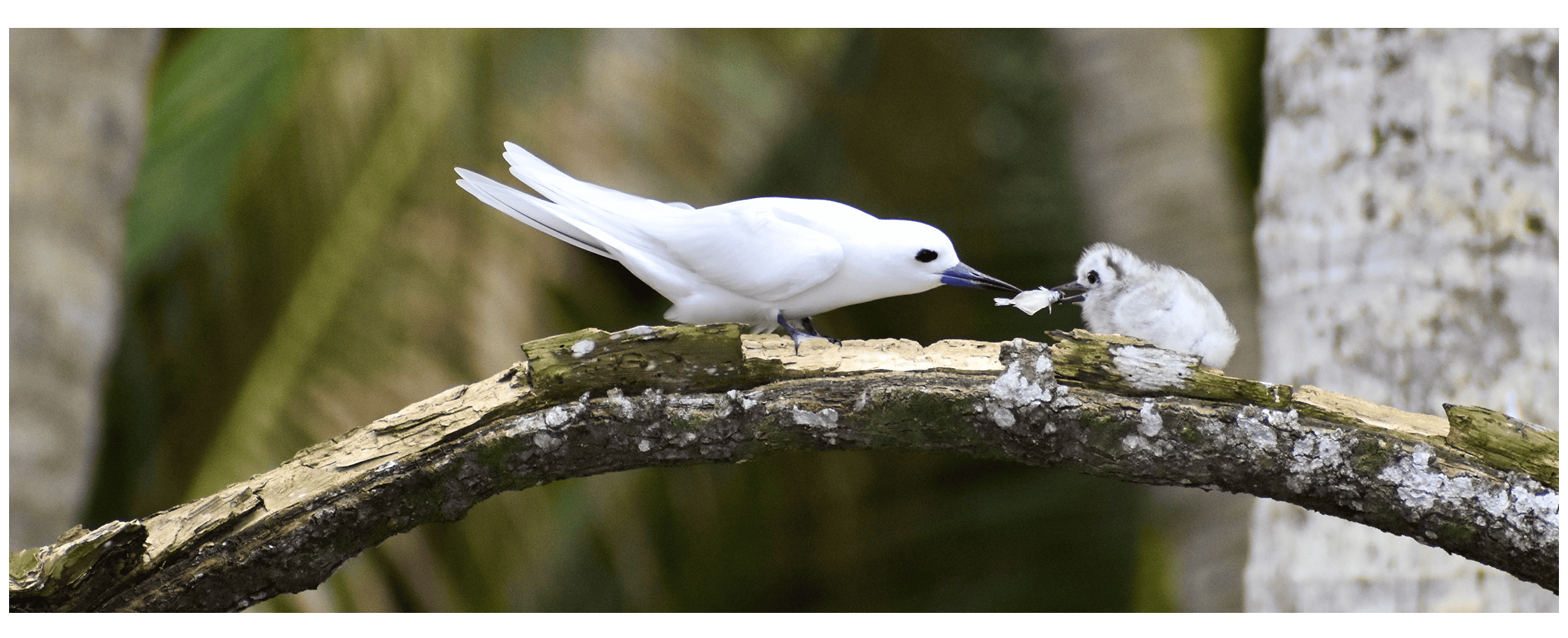
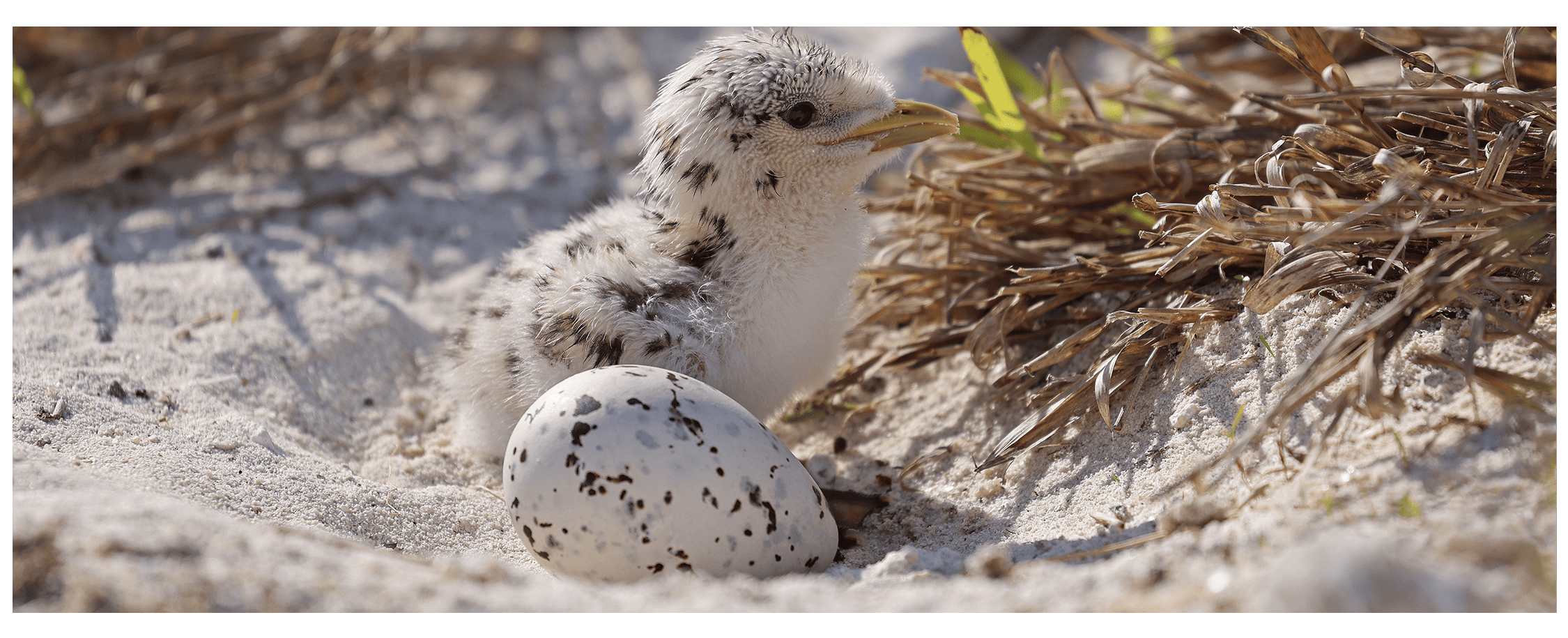
Tetiaroa is home to 16 bird species, including 11 breeding seabirds from the Brown Booby, which can weigh more than 3 pounds, to the White Tern, also called fairy tern due to its small and dainty frame.

Bird research specialists hosted by Tetiaroa Society tracking the birds’ flight patterns and their breeding success over the years identified that invasive species were negatively impacting chicks’ survival rate.

Chick predation

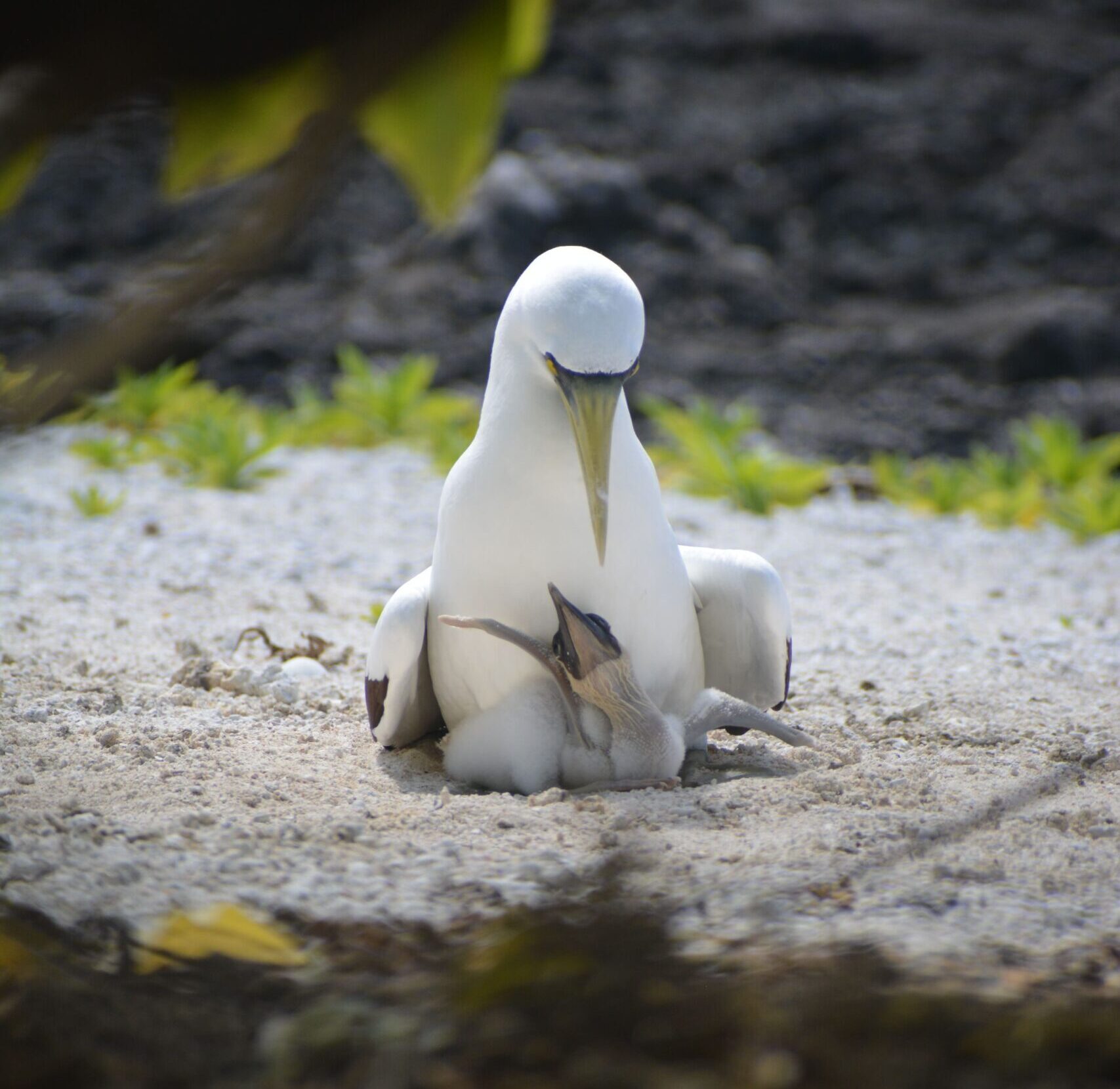
The atoll’s seabirds were under pressure: rats were eating white tern eggs before they could hatch and yellow crazy ants were attacking brown noddy chicks, with a very high mortality rate on several motu. Masked boobies even went years without a single sighting on the atoll and the first chicks spotted in 2022 from one nesting couple were truly a sign of hope !

Of Tetiaroa’s 12 motu, rats were present on 10 and yellow crazy ants on 4.

The situation was concerning, as seabirds are ecosystem engineers. Their guano droppings are packed with nutrients that fertilize coral reefs. Renewed seabird populations maintain healthy reefs while healthy reefs, essential habitats for marine life, mean thriving oceans.

So in 2018, Tetiaroa Society—the nonprofit conservation arm of The Brando eco-resort—launched the Tetiaroa Atoll Restoration Program (TARP) with one bold mission:restore the natural balance by eliminating invasive species and protecting biodiversity.

Encouraging results

Today, every single one of Tetiaroa’s 12 motus has been treated for rats. Yellow crazy ant infestations have been eliminated. And the birds are responding.

White terns have more than doubled their presence. We counted 175 nests before TARP began. By 2022, we were monitoring 460 nests. In areas now free of rats, there are 2.6 times more nests. 77% of eggs are hatching, and 90% of those chicks are surviving to fledge, growing strong enough to fly and leave the nest.

Brown noddies are bouncing back too. After yellow crazy ant removal, nest numbers jumped 2.8 times in just one year. In 2022, we monitored 502 eggs and about half successfully hatched—a dramatic turnaround from the near-total losses we used to see on several motu.

Masked boobies are back on the atoll. Between 1994 and 2021 a single observation of the species hadn’t even been recorded in Tetiaroa. Since 2022, at least one chick has successfully fledged each year.

What’s Next

TARP’s work hasn’t gone unnoticed. In 2024, we received La Mer en Commun label from the Government of French Polynesia, recognizing our contribution to “preserving coral reefs and the health of lagoons, sources of life, biodiversity, and community well-being.”

But here’s the truth: this recovery is fragile. Nature can heal remarkably fast when given a chance, but invasive species can return. A few rat observations have been reported on a motu despite clear eradication and a new campaign will be launched again soon.

Continued monitoring, nest protection, and pest control are essential to securing the next generation of seabirds and the coral reefs they support. Tetiaroa is proving that island restoration works. In a world facing climate change and biodiversity loss, this atoll is becoming a model for conservation everywhere…

How to be a part of this

Our Board are stepping up to match every gift made this Giving Tuesday, up to $20,000 USD.
That means your $100 becomes $200.

They’re challenging us to double our impact for the island, and your support makes this possible.

Giving Tuesday : Protecting our seabirds together


A Festive Season Around Polynesian Art of Living

Tides and Moonlight

Te aho no Tetiaroa

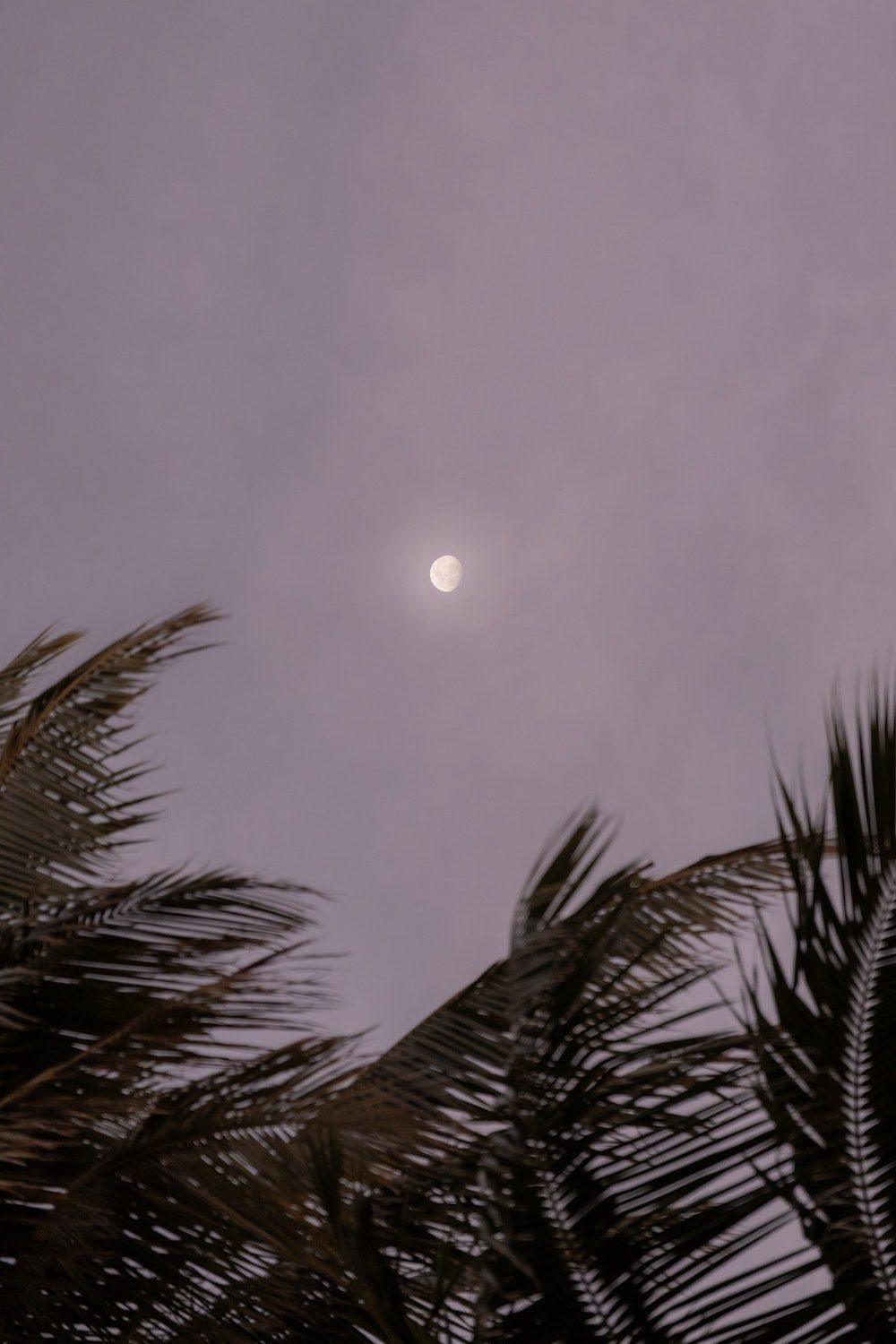
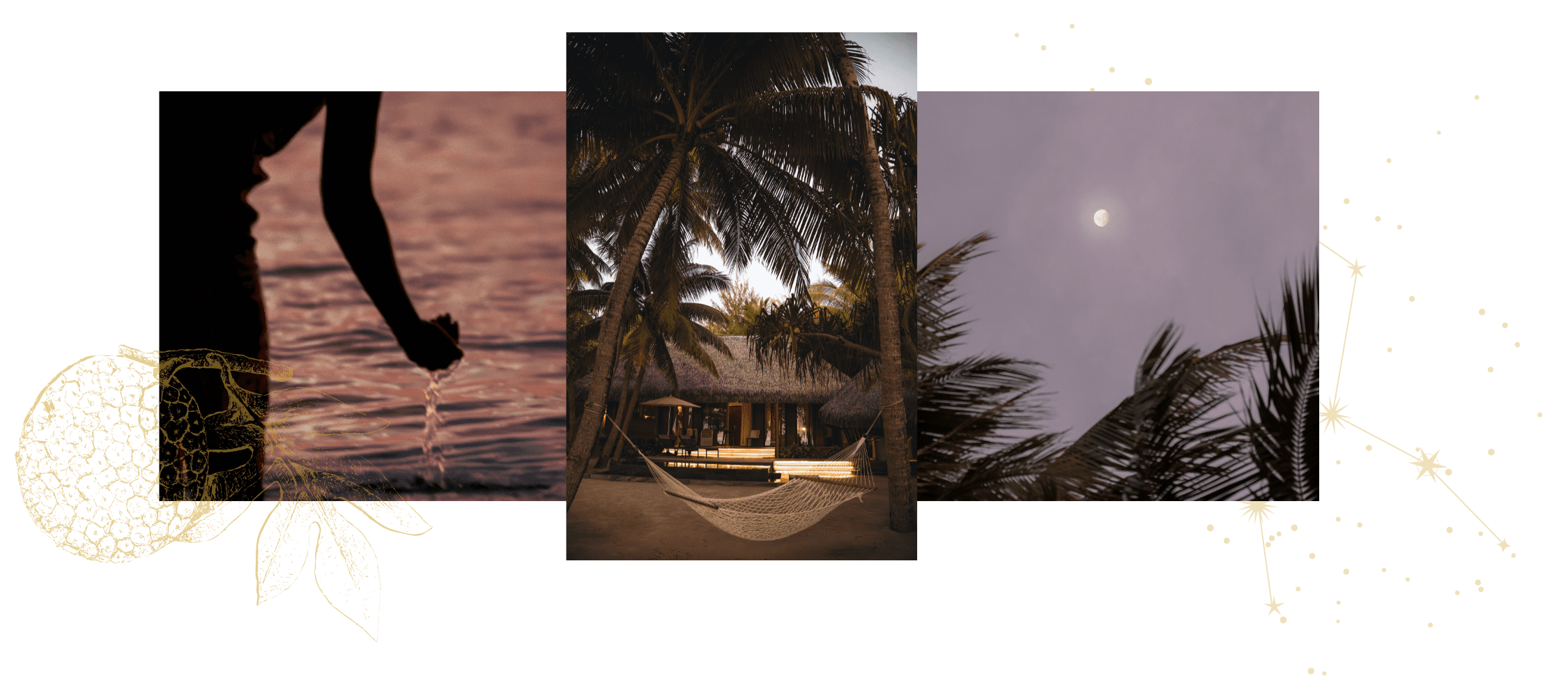
And with the stars appearing in the night sky, the moon rises, marking the cycles for all living things. Aho means breath in Tahitian. Te aho no Tetiaroa is the breath of the island. Every night of the month, looking towards the sky to answer daily needs, it is the moon that guided Polynesians to fish at sea or for a new crop to be planted on a particular night.

They had an intimate knowledge of its influence over the realm of the land and sea. They had an intimate understanding of its power over the tides, occasionally bringing abundance and fertility, other nights inviting to rest and reflect. And basked in its elegant blue light, with all the elegance of Hina, its deity, there comes a certain wisdom and understanding. This is the time to connect with profound feelings and intentions, and send them back to loved ones.

Before dawn, there’s just breath. Feelings become clearer, like the lagoon when the wind finally settles. Intuition rises gently, following the same invisible pull as the tide; what could not be heard in the brightness of day suddenly finds its own quiet language.

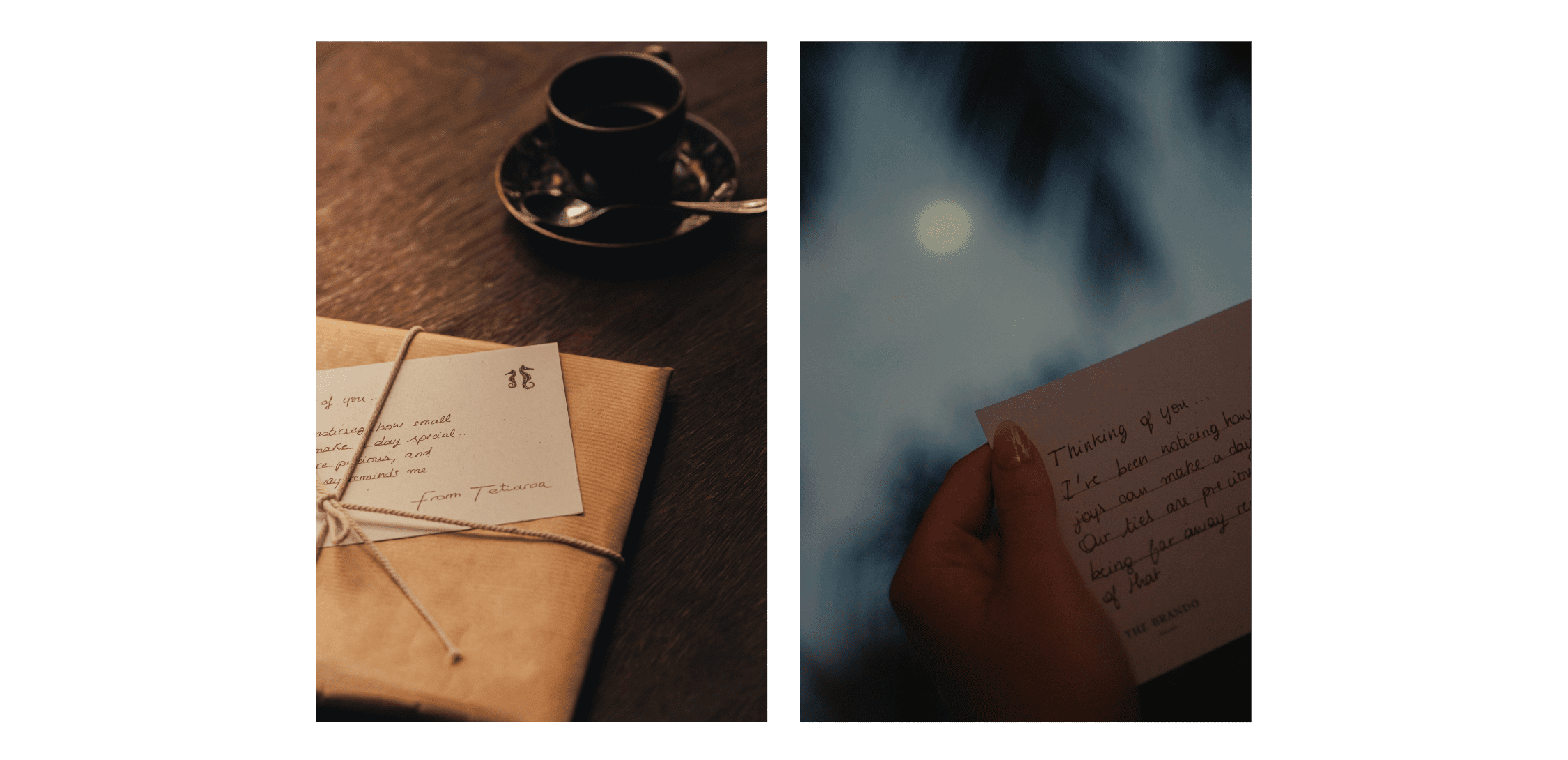
Somewhere else in the world, those we love are standing under this very canopy of stars, beneath the same moon that leans over Tetiaroa. In that space, a thought turns into something you can hold, a postcard with simple words sent across the distance. It is a gentle invitation to feel a little closer to the island, until one day you might come and feel the mana of Tetiaroa for yourself, first felt as a small gift held close to the heart.

FIND YOUR SANCTUARY FOR FESTIVE SEASON

The Journey Starts Here

Green Sea Turtle Nesting in Tetiaroa

Witnessing a green turtle nesting is to observe one of nature’s most intimate rituals.

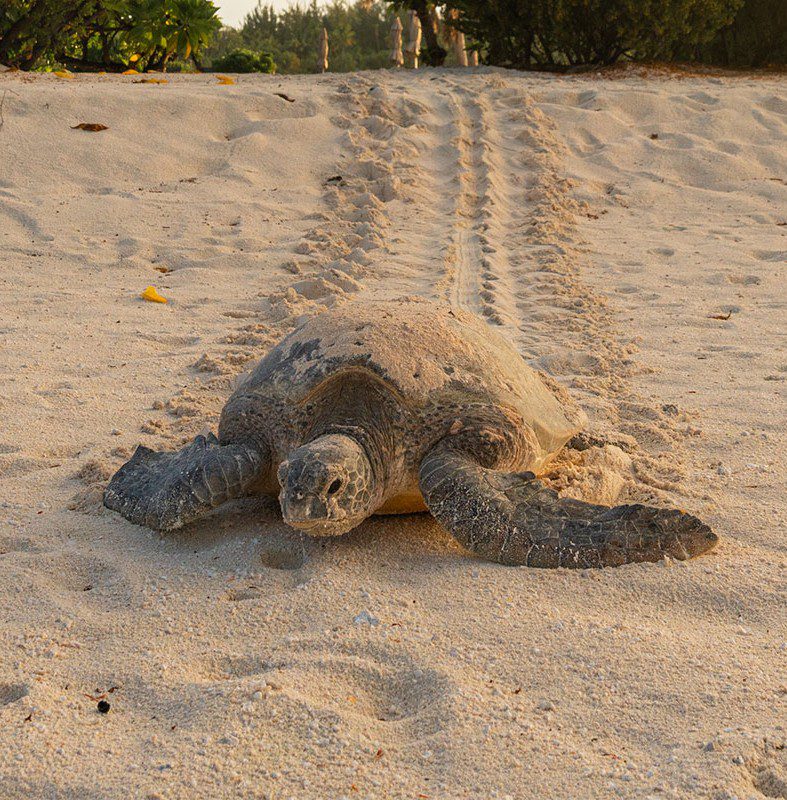
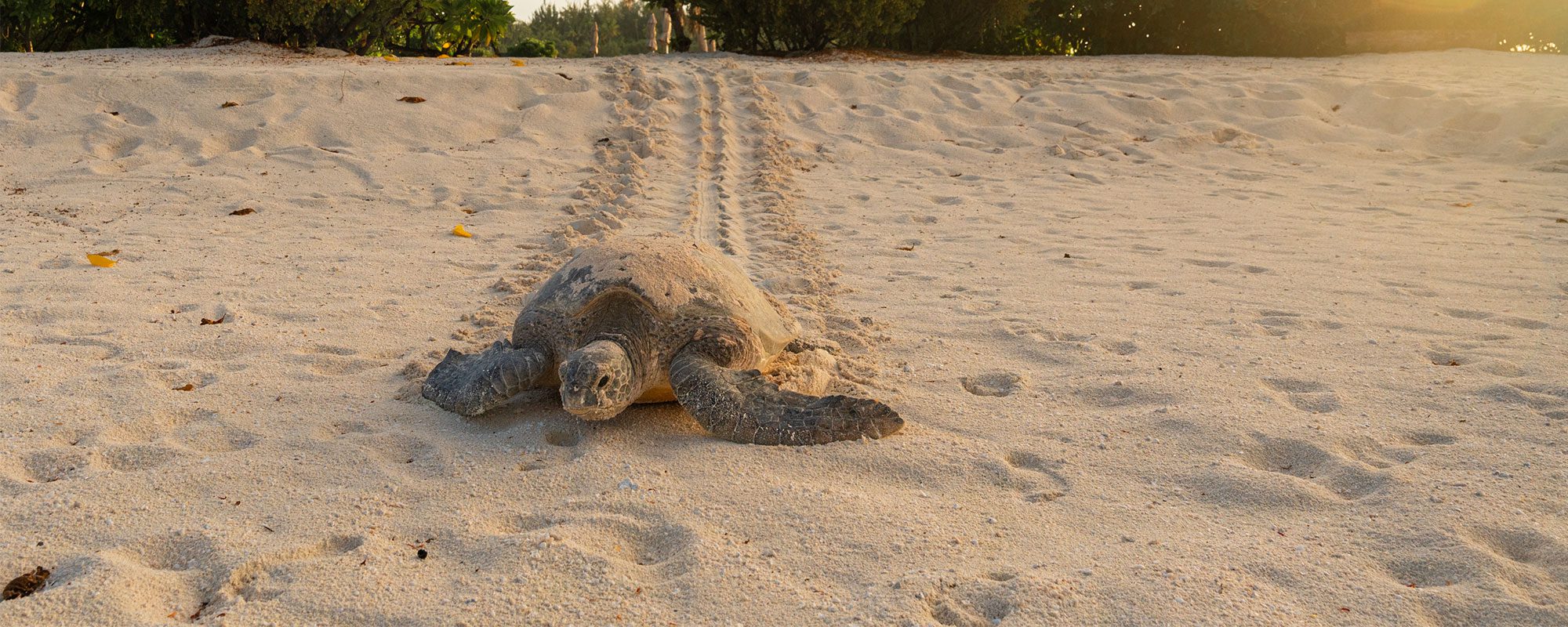
She emerges from the lagoon under cover of darkness, her shell glistening in the moonlight. Slowly, methodically, she drags herself onto the beach. Every movement is deliberate, every breath heavy. At the high tide line, just beyond the reach of the waves, she begins to dig.

Using her powerful hind flippers, she digs a hole in the sand, about 20 inches deep. The process is meticulous. When she is ready, she begins to lay her eggs: about 80 to 120 spherical eggs, each the size of a ping-pong ball.

Next comes camouflage. Using the same hind flippers, she covers the nest by packing down the sand. She flips sand around to confuse predators before finally returning to the sea.

The whole process takes about two hours. It is exhausting, vulnerable, and fascinating to watch.

The hatchlings’ race

Two months later, the beach is bustling again.

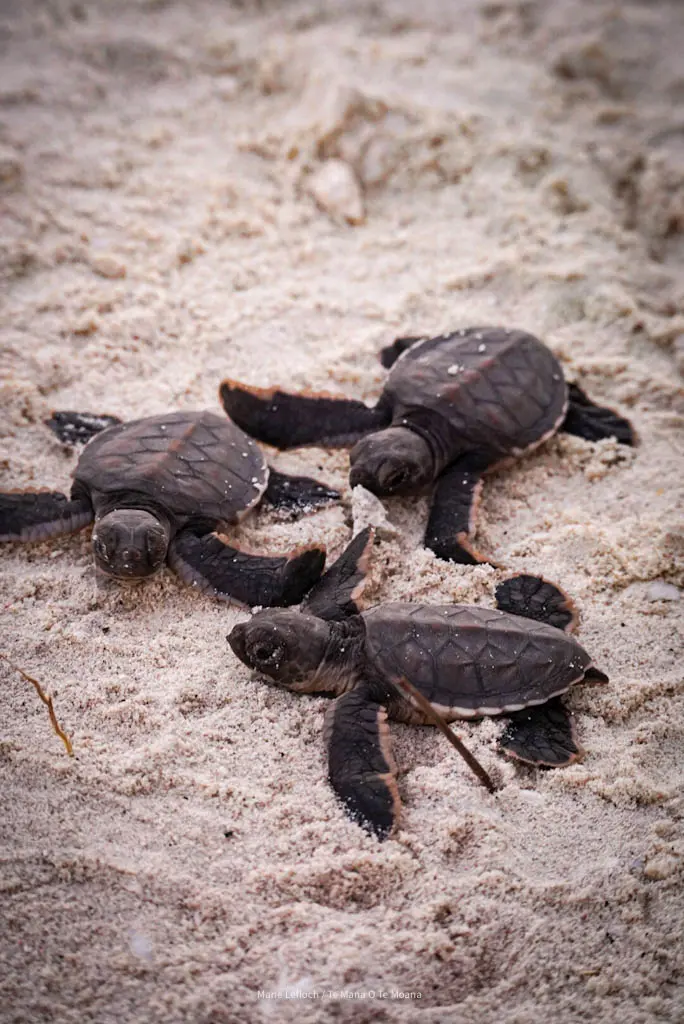
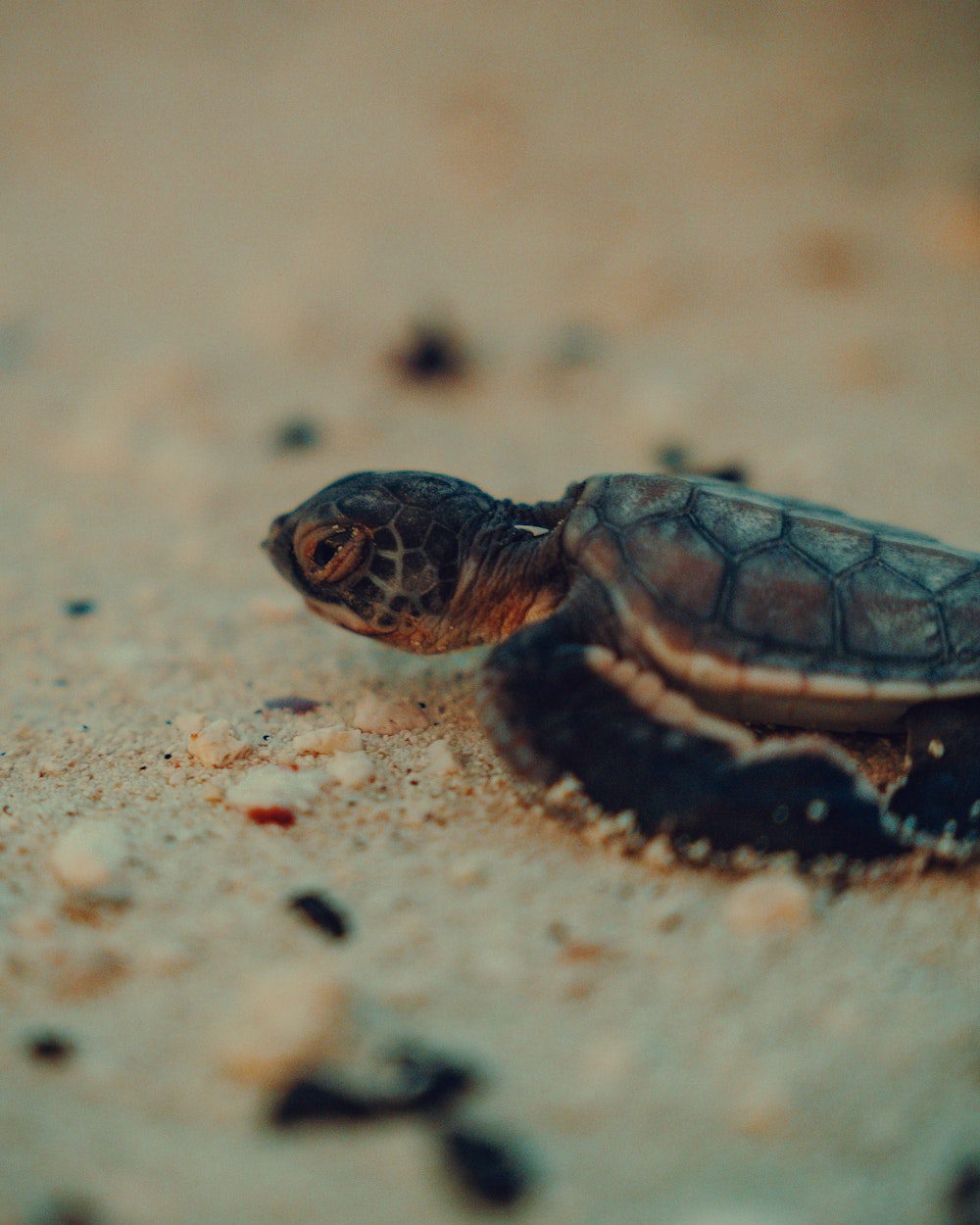
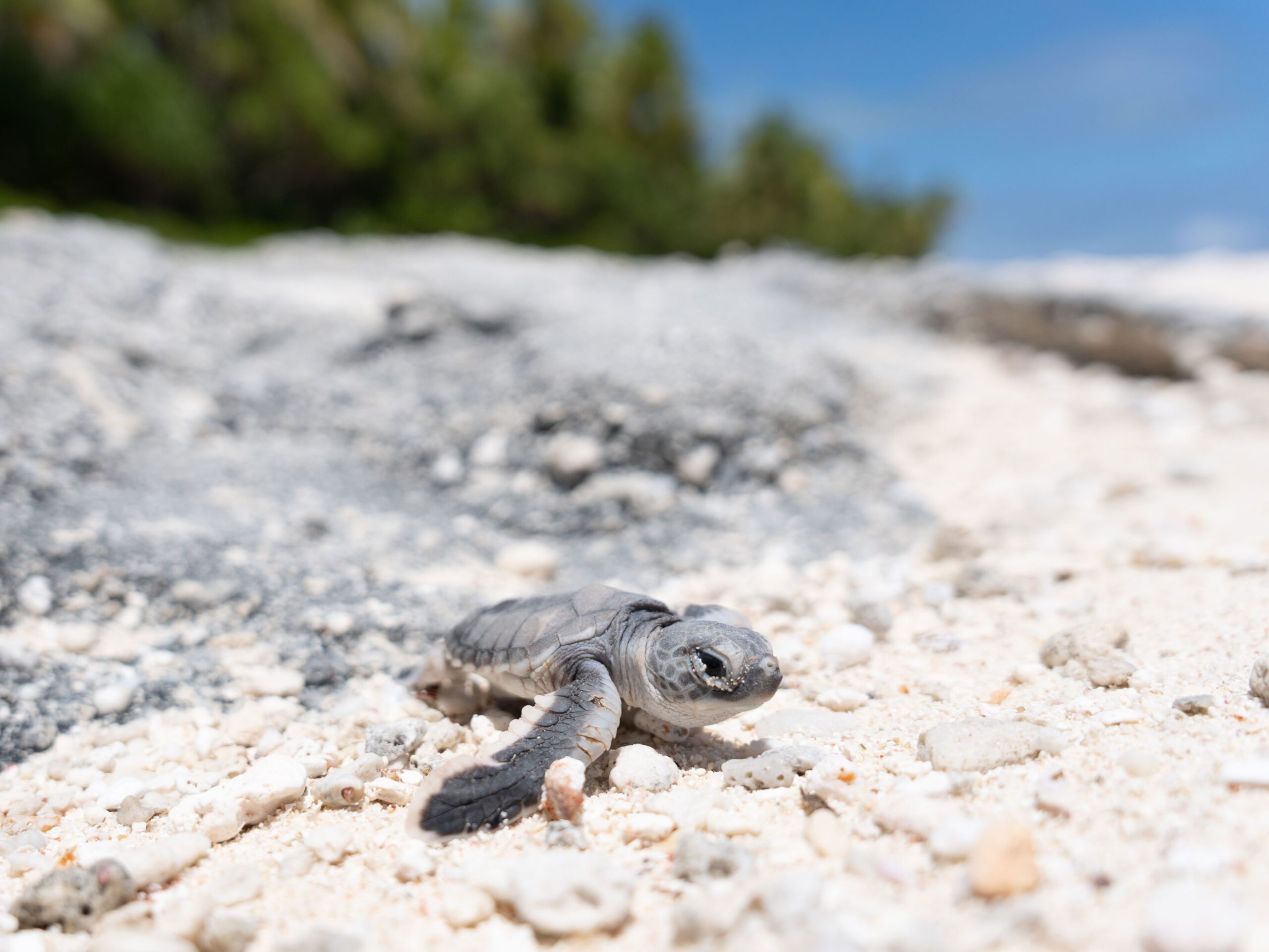
After incubating in the warm sand (their sex being determined by temperature, with warmer nests producing females and cooler nests producing males), the hatchlings begin to emerge. They dig upward in groups, bursting out of the sand at night when temperatures are cooler and predators are fewer.

What follows is one of nature’s most perilous journeys: a frantic race across the beach to the lagoon, and for those who make it, to the reef.

Their tiny fins propel them forward. Each hatchling weighs less than an ounce. Crabs wait in the shadows. Frigate birds circle overhead. In the lagoon, predatory fish and blacktip sharks gather.

Out of every 1,000 eggs laid, one hatchling will survive to reproductive age. That’s why every egg counts.

Guests who wish to participate are placed on a waiting list. If nature permits, they will be invited before dawn to watch the hatchlings launch onto the beach for their first big swim.

A Festive Season Around Polynesian Art of Living

The Bonds That Unite Us

Strands of Heritage

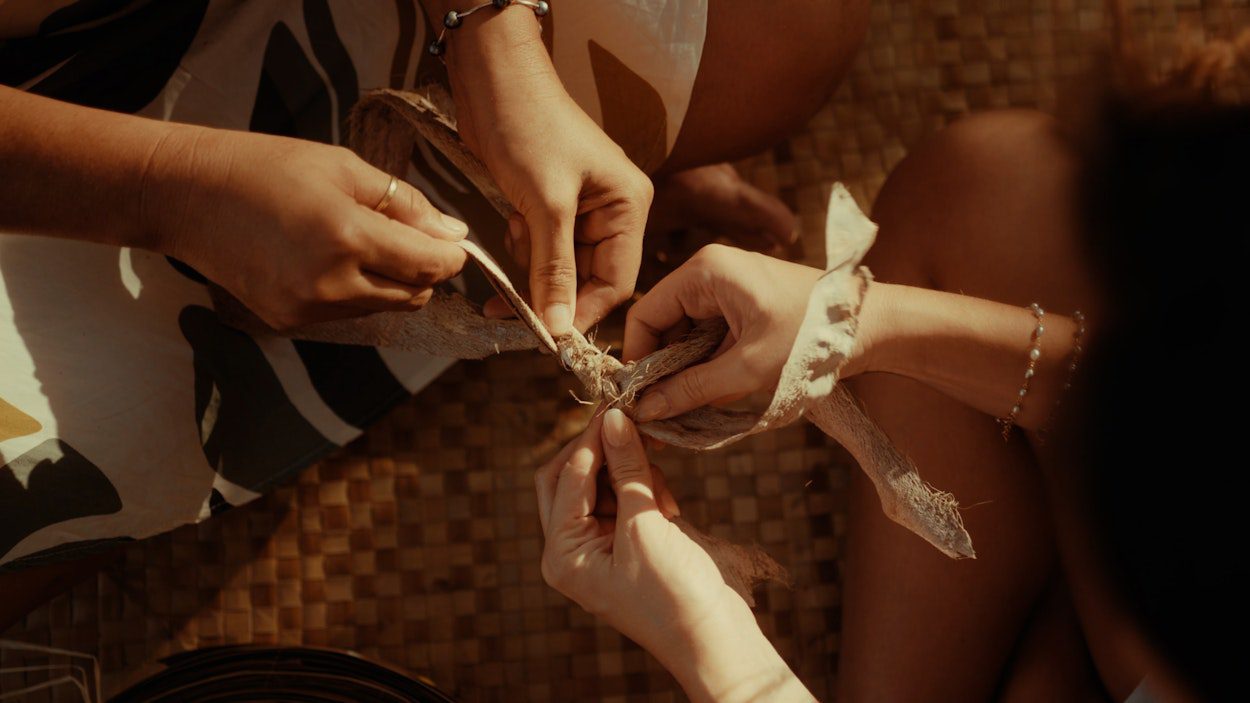
Weaving pandanus in the shade of the fare, the elder’s hands move without looking. She’s been doing this since she was a young girl herself. Her daughter works beside her, fingers nearly as sure. The granddaughter is still learning, counting the strands, occasionally having to start over.

This is how culture moves here—through the ordinary repeated gesture.
The Fara, Pandanus tree, seems to dance along the coastline with elegant aerial roots. Its long ribbon-like leaves sway with the wind, growing along the same shore as thousands of years ago.

Harvested leaves are dipped in the ocean and dried in the sun until they become smooth and supple, then rolled in large coils ready for shipping, dispatched to weavers across the islands.

Before beginning their creation, they use a needle to split the leaf coil, creating several strands. Some go about it as a social affair, with baskets or hats emerging while chatting away. Others, intently focused on their work in progress, perform the same century old patterns as their ancestors in what seems like a silent meditation.

Polynesians navigated by patterns too. Patterns of stars across the skies, patterns of waves against the hull, patterns of the birds’ flight paths… They read the ocean the way their hands now read pandanus: following a certain rhythm, with an intuitive familiarity with how things fit together.

COME WEAVE YOUR OWN STORIES IN TETIAROA

Green Sea Turtles in Tetiaroa

Each year, from September to March, something extraordinary unfolds on the shores of Tetiaroa Atoll.

Under moonlit skies and in the quiet hours before dawn, green sea turtles (known as honu in Tahitian) emerge from the ocean to nest on the same beaches where they themselves were born decades earlier.

The eggs then hatch 60 days later, officially ending the observation season in April.

Their return is not simply instinct. It is an ancient covenant between the sea and the shore, a sacred cycle that has endured for millennia.

Tetiaroa is one of French Polynesia’s most significant nesting sanctuaries for green sea turtles, a species that carries both ecological importance and deep cultural meaning throughout the Pacific.

The Journey of a Lifetime

A female green turtle’s path to Tetiaroa begins long before she arrives. After hatching on these very shores 25 to 30 years earlier, she crawled across the sand as a hatchling no larger than the palm of your hand and disappeared into the vast Pacific.

What followed were the “lost years,” a period scientists call this because the young turtles become nearly impossible to track. For approximately three to five years, she drifted with ocean currents across the open ocean, her dark upper shell camouflaging her from birds above, her white underside blending with the bright sky when viewed from below. During this pelagic phase, she was carnivorous, feeding on invertebrates and small fish encountered in the drifting communities of the open sea.

The odds were against her. Almost all hatchlings are consumed by predators or perish from starvation during these vulnerable years.

Eventually, when she is almost mature, thanks to data tracking information on some individuals, marine biologists believe she has found  her way to the seagrass meadows of Fiji. Here, she became one of the ocean’s grazers, feeding on seagrass and algae for more than 80 percent of daylight hours.

Now, driven by an internal compass imprinted during her first frantic swim as a hatchling, she navigates back across open ocean. She returns to the exact stretch of beach where her life began, guided by the Earth’s magnetic field and an ancestral memory encoded in her very being.

The journey is exhausting. She eats very little for months and survives on stored fat as she swims over 1800 miles and mates in the waters offshore Tetiaroa.

Book Your Journey of a Lifetime

A Festive Season Around Polynesian Art of Living

The Art of Being

E vai noa ra

The lagoon at mid-morning holds no movement. Time moves differently…

The Tahitians have a word for this: Vai. Water. And also to exist, to be, to remain.
E vai noa ra—and so it continues to be.

It is first noticeable in how Polynesians move in space. Not slowly, exactly, without the urgency that passes for purpose elsewhere. Ori haere, is to walk around without a specific destination in mind. It’s about refusing to mistake motion for meaning. With no pressure to explore, the journey changes meaning, and there is time to truly unwind.

Around midday, the light filters through the palms and rests on the still water. The air carries the scent of tiare and warm mono’i oils. Somewhere nearby, a soft cascade breaks the silence, steady and unhurried.
The mind quiets as the body listens to the rustle of trees, the sound of water folding over stone, the faint resonance of bowls that rise and fade like breath.

Here, movement becomes something subtle, internal, like the opening of a water lily, the slow drift of a fish beneath the pond’s surface, the play of a shadow across the wood. Nothing asks to be done; everything simply is.


Embrace the stillness

Meanwhile, the trade winds gently blow. Maoake, the wind from the Northeast,
is referred to as te metua vahine, the mother of all winds.
Carrying seedlings that become sea bushes or trees, rustling palm fronds, making rainwater travel like dancing curtains, rippling and shifting the surface of water into diamonds…

An Immersive Journey to Tetiaroa with Android XR & Google

The Brando announces the global premiere of An Immersive Journey to Tetiaroa with Android XR & Google – Experience The Brando in 180°, a 16-minute immersive film produced in partnership with Google and its content innovation initiative 100 ZEROS, with Media Monks as production partner and creative collaboration from Tetiaroa Society and Te Mana o Te Moana.

WATCH NOW ON YOUTUBE

Designed for the new Android XR platform and available on YouTube, the film offers an intimate passage into the life of the atoll – through innovation, ecology, and story. Filmed across French Polynesia and New York City, the film features Richard Bailey, Founder of The Brando, and Rebecca Brando, daughter of Marlon Brando, as they share the vision of a place where preservation is not only practiced, but lived. Together they guide viewers through the wonder of Tetiaroa, Marlon Brando’s atoll, and the ongoing work of The Brando and Tetiaroa Society to protect and regenerate this rare ecosystem.

“Marlon Brando dreamed that Tetiaroa could be a place where people learn to live in harmony with nature,” says Richard Bailey. “This film carries that dream forward, showing how innovation can serve preservation.”

Captured in VR 180°, the film draws the viewer close, into the stillness of the forest, the hush of the lagoon, the daily work of researchers and conservationists. Unlike traditional documentaries or travel films, this format offers a rare sense of presence, even from afar. It allows one to feel the atoll without standing on its sand. And yet, in doing so, it makes the longing to be there even stronger.

STEP INTO THE FILM

This project is a first for luxury ecotourism in the Pacific: a partnership where cutting-edge technology supports ecological storytelling. Created for the Android XR platform, the experience is fully accessible via YouTube – on VR headsets, mobile, and desktop – bringing immersive storytelling to a global audience. With Google’s 100 ZEROS, Samsung, and Media.Monks, the film explores how innovation can deepen empathy, not just enhance immersion.

Beyond the images lies the deeper rhythm of the island: the care of Tetiaroa Society, the protection of hatchlings by Te Mana o te moana, the weaving of tradition and science. The Brando is not a place for passive luxury. It asks something quieter: attention. Respect. Participation. This film allows a glimpse into that rhythm.

YouTube

By loading the video, you agree to YouTube’s privacy policy.
Learn more

Load video

Produced by The Brando in association with Media Monks, in partnership with Google and its content innovation initiative 100 ZEROS, with creative collaboration from Tetiaroa Society and Te Mana o Te Moana.

Filmed on location in Tetiaroa, Tahiti, Moorea, and New York City.

The Brando, a Three Keys
Michelin Guide Resort

The Brando has joined a circle of just 143 hotels across the globe – and only two in all of the Pacific – awarded Three MICHELIN Keys, the highest distinction in the MICHELIN Guide’s new selection of extraordinary hotels.
Here, on the atoll of Tetiaroa, where green sea turtles return and the moon still governs the tides, luxury means
knowing your presence leaves no trace.

The MICHELIN Keys were created for the traveler who seeks more than beauty, for those who wish to stand in places that shape them. The Brando was chosen for its “extraordinary character and unforgettable experience”, where every element, from the villas to the cuisine to the silence, reflects a profound connection to its rich heritage.

THE BRANDO, A MICHELIN GUIDE RESORT

“The MICHELIN Keys honor places that stir something deeper,” says Christophe Adam, General Manager of The Brando.
“They ask not what a hotel has, but what it means to the land, to the culture, and to those who walk its shores.”

Each Key reflects a global standard of excellence.
One Key recognises a truly special stay.
Two Keys distinguish an exceptional experience.
Three Keys honour an extraordinary stay.

BOOK AN EXTRAORDINARY STAY AT THE BRANDO

The Brando: A Key to What Matters

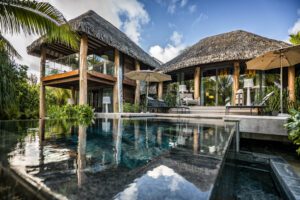
On Tetiaroa, ancestral Polynesian wisdom meets the science of tomorrow. At the Brando, beneath the coconut palms, LEED-Platinum certified villas blend seamlessly into the island’s natural rhythm. Wellness unfolds in harmony with the environment : a massage in the lagoon’s stillness, a dive guided by our naturalists, each experience revealing nature as kin, not backdrop. Tetiaroa’s story is written in coral and tide, in chants and migrations that have shaped its spirit for centuries. From the instant guests step barefoot onto the sand, they enter a rhythm that endures. One that invites them to always return.

As Matari‘i i ni‘a, the season of abundance, begins, hatchlings once again emerge from the warm earth : a natural renewal that mirrors the announcement of the MICHELIN Keys. More than a culmination, it is the start of a new chapter for The Brando.

Why It Matters

Recognition from MICHELIN Guide does not come from spectacle but from substance. Behind their quiet visits lies an understanding of what truly endures: integrity, intention, and care.

It is more than an honour for The Brando. It is a reminder that the path we follow, one of regeneration and ancestral connection guided by the joy of simplicity, was never meant to be the easiest. It has always been the right one.

PLAN YOUR JOURNEY TO TETIAROA


A Festive Season Around Polynesian Art of Living

The Island Speaks

Through all living things

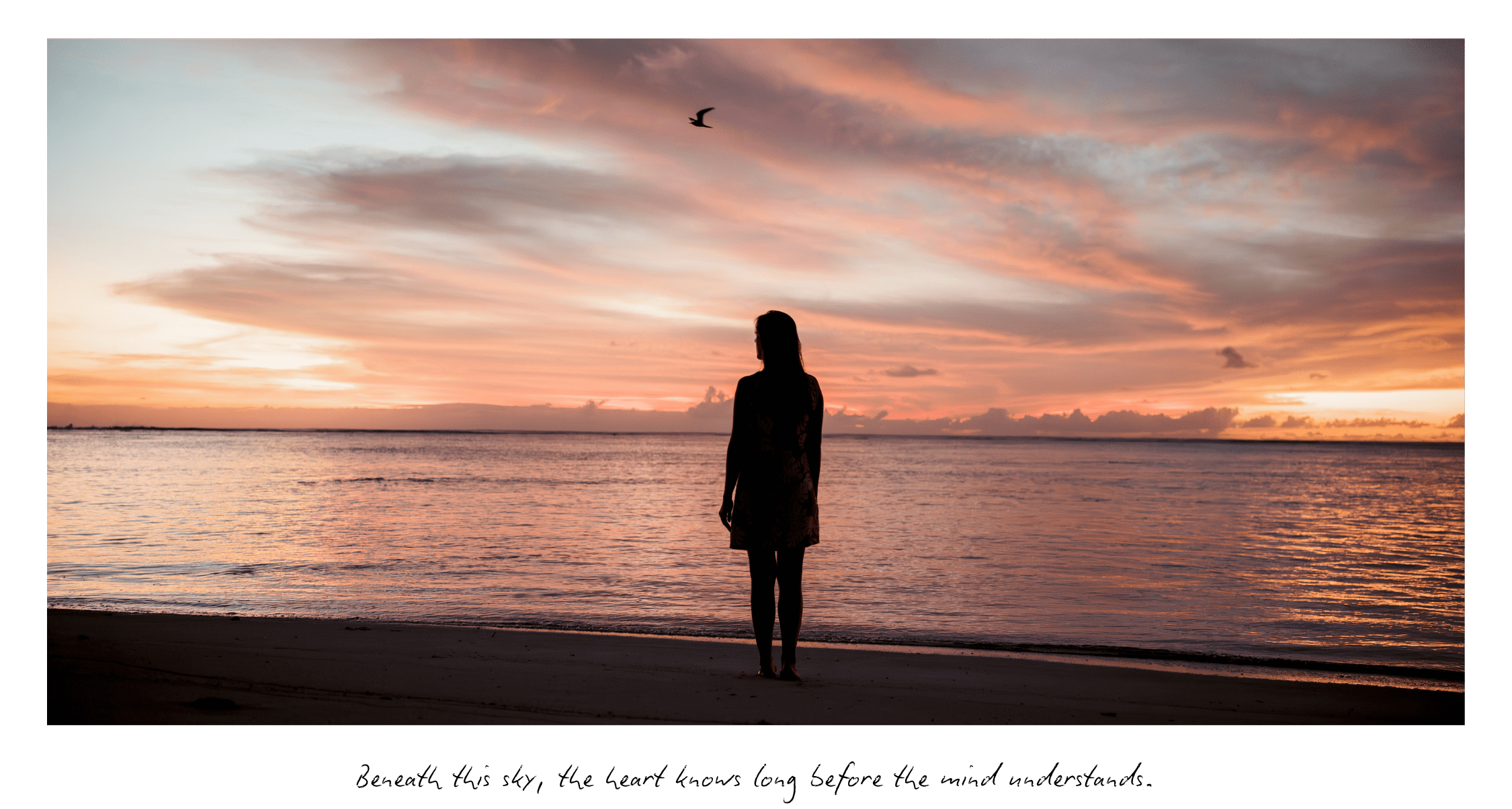
Standing at the water’s edge, a pāreu loosely tied at the waist, the breeze shifts.
Above, flocks of terns suddenly take flight, dozens of wings catching the golden light.

Polynesians have always known this. It’s there in the very word pāreu—not just the cloth itself, but the act of wrapping it around your body. Tying a pāreu is not simply getting dressed, but the need to move freely between land and water. It’s participating in a gesture that once meant respect for the sacred, and still does.

Kahaia grows wild along the shoreline, white flowers unpretentious against glossy leaves. At certain times of day, when the air is still warm but beginning to cool, when the light turns golden and the birds begin their evening flights, its scent becomes part of the island’s breath. You smell the kahaia before you see it, the flower’s perfume mingles with salt air.

This is what Polynesians call mana: more than a mystical abstraction, the tangible energy of a place where everything is connected, the life force that flows through all things when they’re in right relationship with each other. Being in Tetiaroa is understanding that beauty isn’t about isolated perfect moments.

Hermit crabs scutter across the sand to hide in the pandanus tree’s aerial roots, while fairy terns are perched above on a branch. Their guano enriches the coral reef that colorful parrotfish nibble, while above black tip sharks roam in shallow waters.

Beyond the postcard image, we see the wholeness of it. The way everything fits. The way a culture had evolved that understood how to live here without changing what made it worth living in.

When Marlon Brando first came to Tetiaroa, this is what captured him.
The island speaks in perfume and flight and fabric moving against skin. And if you’re quiet enough, present enough, you might find yourself answering back…

STEP INTO OUR WORLD

Book your stay

Adults

Kids

Infants

Guests

NO. OF GUESTS

Arrival / departure

/