Green Sea Turtles in Tetiaroa
Each year, from September to March, something extraordinary unfolds on the shores of Tetiaroa Atoll.
Under moonlit skies and in the quiet hours before dawn, green sea turtles (known as honu in Tahitian) emerge from the ocean to nest on the same beaches where they themselves were born decades earlier.
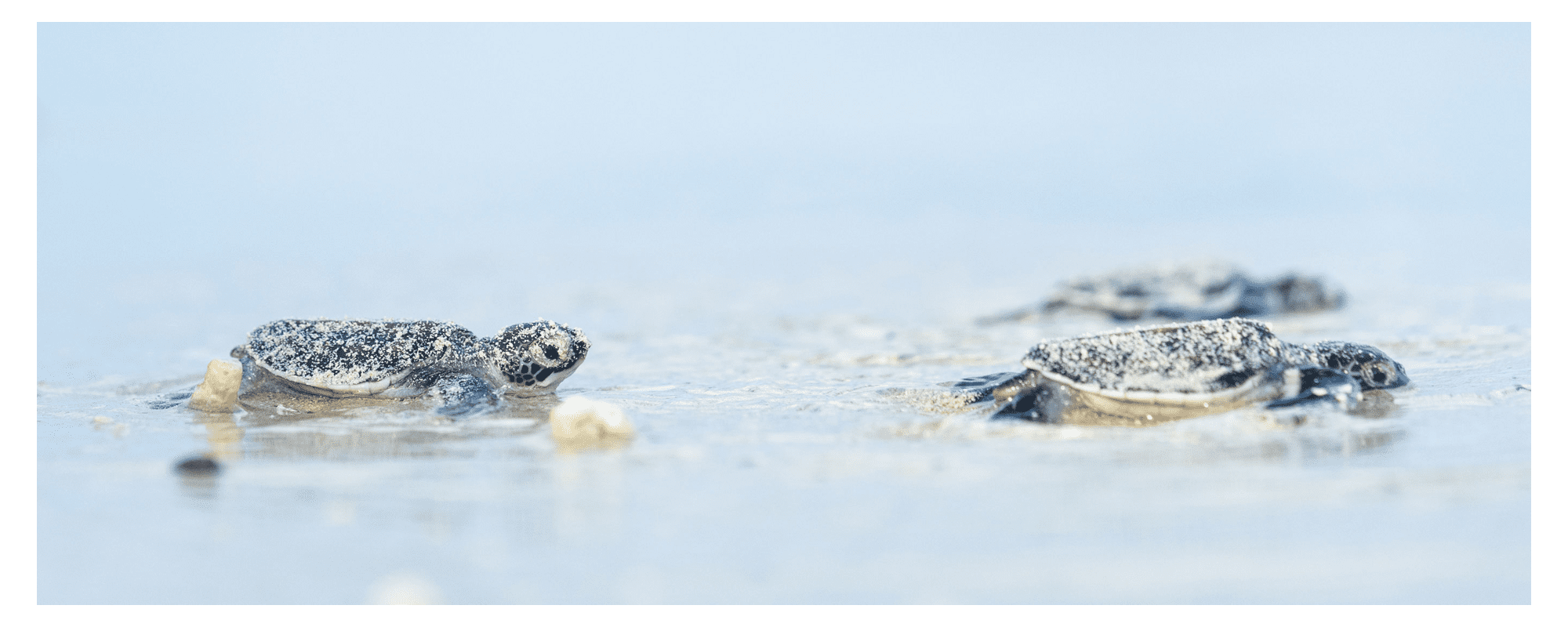
The eggs then hatch 60 days later, officially ending the observation season in April.
Their return is not simply instinct. It is an ancient covenant between the sea and the shore, a sacred cycle that has endured for millennia.
Tetiaroa is one of French Polynesia’s most significant nesting sanctuaries for green sea turtles, a species that carries both ecological importance and deep cultural meaning throughout the Pacific.
The Journey of a Lifetime
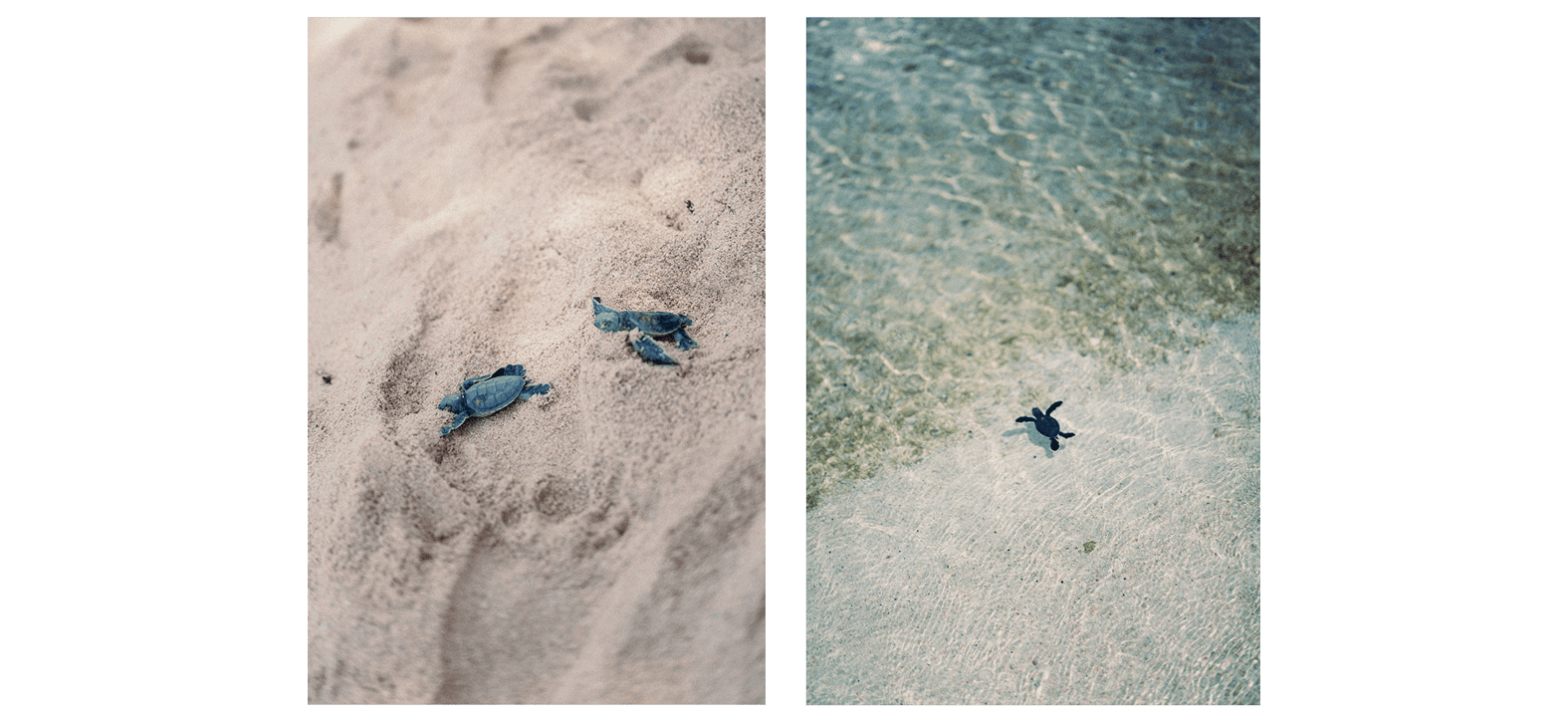
A female green turtle’s path to Tetiaroa begins long before she arrives. After hatching on these very shores 25 to 30 years earlier, she crawled across the sand as a hatchling no larger than the palm of your hand and disappeared into the vast Pacific.
What followed were the “lost years,” a period scientists call this because the young turtles become nearly impossible to track. For approximately three to five years, she drifted with ocean currents across the open ocean, her dark upper shell camouflaging her from birds above, her white underside blending with the bright sky when viewed from below. During this pelagic phase, she was carnivorous, feeding on invertebrates and small fish encountered in the drifting communities of the open sea.
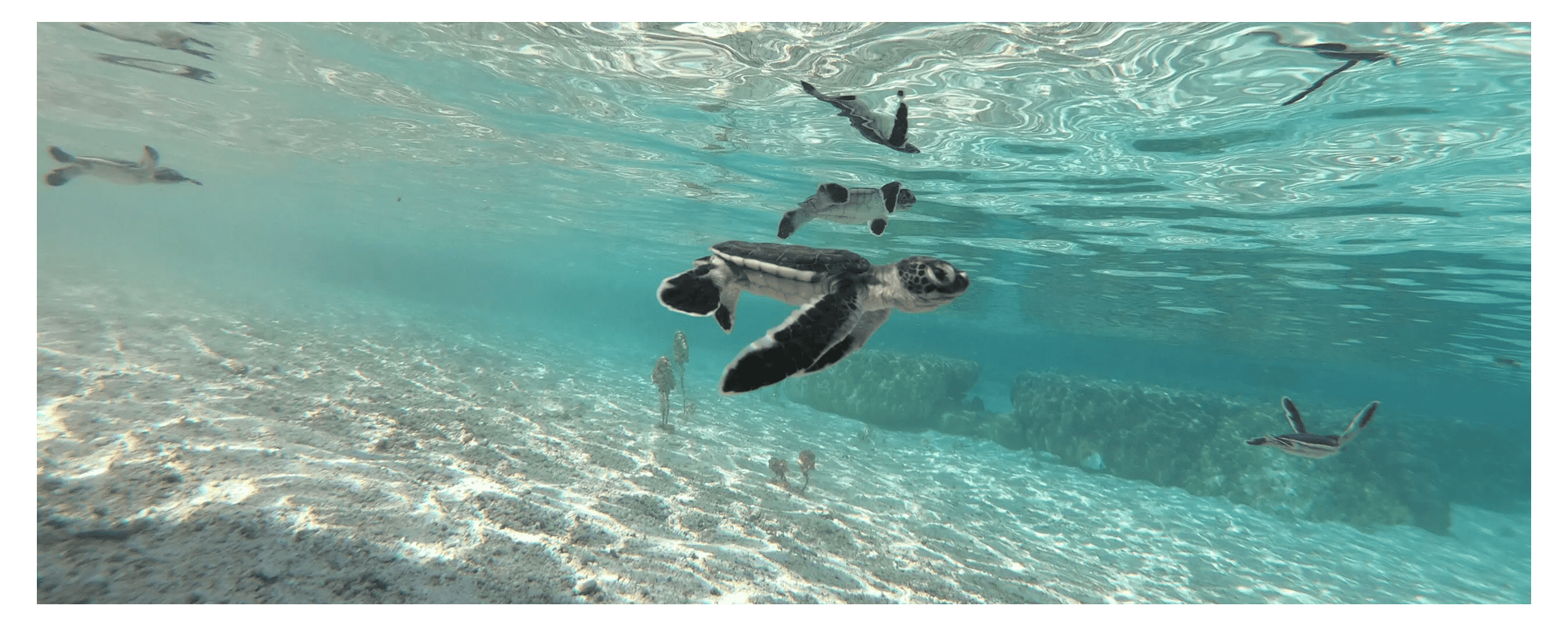
The odds were against her. Almost all hatchlings are consumed by predators or perish from starvation during these vulnerable years.
Eventually, when she is almost mature, thanks to data tracking information on some individuals, marine biologists believe she has found her way to the seagrass meadows of Fiji. Here, she became one of the ocean’s grazers, feeding on seagrass and algae for more than 80 percent of daylight hours.
Now, driven by an internal compass imprinted during her first frantic swim as a hatchling, she navigates back across open ocean. She returns to the exact stretch of beach where her life began, guided by the Earth’s magnetic field and an ancestral memory encoded in her very being.
The journey is exhausting. She eats very little for months and survives on stored fat as she swims over 1800 miles and mates in the waters offshore Tetiaroa.